Report from Geomorphometry 2009

Bob MacMillanFYI: a short report from Geomorphometry 2009 by Bob MacMillan (ISRIC) published in the Pedometron newsletter #28:

Location: 
ISRICWageningen
Netherlands
51° 57' 52.7076" N, 5° 39' 44.4996" E
See map: Google Maps

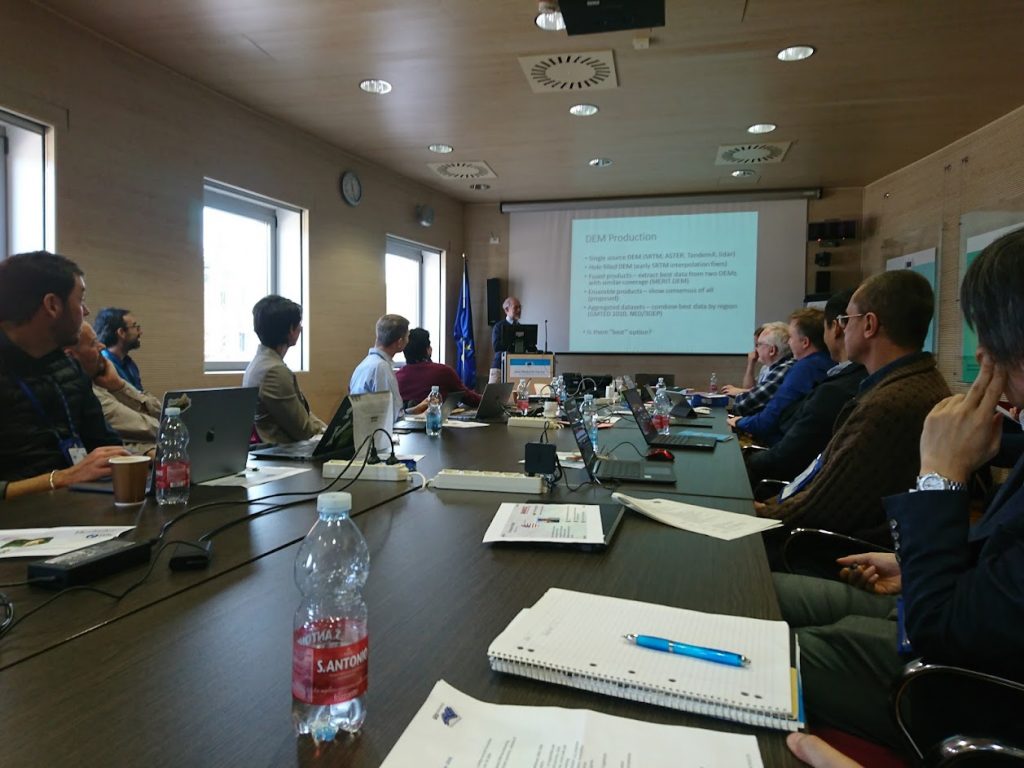
Conference participants of Geomorphometry 2009, Zurich

Conference participants of Geomorphometry 2009, Zurich

A number of photos from the conference are already available via the gallery link. Everybody is welcome to contribute.

41st International Binghamton Geomorphology Symposium

Oct 15 2010 08:30
Oct 17 2010 14:00
Europe/London

Geospatial Technologies & Geomorphological Mapping
October 15 to 17, 2010 - University of South Carolina - Columbia, SC

Tentative Program Schedule (subject to revision) 

Location of event: 
University of South CarolinaColumbia, SC
United States
34° 0' 2.556" N, 81° 2' 5.3304" W
See map: Google Maps

TopoToolbox - a set of Matlab functions for topographic analysis

Wolfgang Schwanghart from the Geographisches Institut, Universität Basel has recently released a toolbox that allows analysis of relief and flow pathways in digital elevation models in Matlab. The toolbox can be used to visualize DEMs, extract simple derivatives, run (and modify) flow models, delineate drainage basins, produce hydrographs and implement similar DEM-based hyrdological analysis. For more info see the User Guide to TopoToolbox.

When you use TopoToolbox in your work, please refer to this publication:

Location: 
Geographisches Institut, Universität BaselBasel
Switzerland
47° 33' 34.614" N, 7° 34' 50.1996" E

Post-doc funding at ESA ("The Changing Earth")

Mar 29 2010 09:00
Mar 29 2010 23:00
Europe/London
Job description: 

The topics addressed covered cutting-edge research in oceanic, land, atmospheric and solid Earth thematic areas, including improvements in the retrievals of atmospheric carbon dioxide from Envisat’s Sciamachy instrument; assimilation of ocean colour data from Envisat’s optical MERIS instrument into biogeochemical ocean models in order to gain a more precise insight into the carbon fluxes between the ocean and the atmosphere; and the use of Synthetic Aperture Radar data to understand the geophysical processes leading to the formation of the rift valley in East Africa.

Requirements: 

Proposals will be selected on the basis of a peer review process by a Scientific Committee. The selection process will be carried out on the basis of the following criteria:

  • Scientific background and experience of the candidate as well as the host institution, including the adequacy of the proposed laboratory facilities, data sets availability and required EO data.
  • Relevance of the proposed work responding to the specific challenges of the Living Planet Program maximising the use of ESA EO assets;
  • Excellence of scientific proposal demonstrating a contribution to science beyond the state of the art and providing a significant advancement towards the achievement of the scientific challenges of the Living Planet program;
  • Adequacy of the proposed methodology, work plan, scientific approach, proposed EO data procurement and available data sets;
  • Impacts of concrete project outputs in terms of scientific results, data sets, products, models and target publications and potential further developments;

After the selection process ESA will send an e-mail only to the selected candidates informing them about the positive result of their application.

Annual brutto salary: 
NA
Job duration: 
2 years
Contact: 

ESA is again offering young scientists the opportunity to undertake innovative research projects aimed at advancing the understanding of the Earth system, with a call for proposals for the Changing Earth Science Network initiative.
This initiative, launched last year, supports European postdoctoral scientists for two years to undertake innovative research projects that address specific scientific challenges outlined in ESA’s science strategy for Earth observation (EO). Up to 10 postdoctoral scientists from Member States will be selected. The deadline for the proposal submission is 29 March 201.

Location: 
ESRINFrascati
Italy
41° 48' 22.3344" N, 12° 40' 49.548" E

GEOSTAT 2010 Summer School

Jun 27 2010 20:00
Jul 4 2010 22:00
Europe/Amsterdam

This is the first call for participation in the GEOSTAT 2010 Summer School. GEOSTAT focuses on important aspects of statistical analysis of spatial and spatio-temporal data using open source / free GIS tools: R, SAGA GIS, GRASS GIS, Quantum GIS, GDAL, Google Earth and similar. The course participants learn how to move data back and forth between different environments, how to produce scripts and automate analysis. We welcome also R beginners and users needing refresh courses in programming. This year, we would also like to introduce/promote topics such as: web-based computing, WPS client-server environments, 3D and 4D geostatistics, combining R+SAGA/GRASS. This is a 5-day course with two parallel sessions, which means that there will be total 7 full-day blocks (three days with parallel sessions) of lectures; the last day of the summer school participants can present their research problems and ask for feedback from the whole summer school. For more info see:

Location of event: 
Forestry faculty
Avda de la virgen del Puerto 2
Plasencia
Spain
40° 2' 28.2912" N, 6° 5' 2.0184" W

GEOMORPHOMETRY.ORG is an international association of researchers and experts open for free exchange of knowledge and opinions about various aspects of DEM processing and digital relief analysis.